Ikebukuro Station
The Ikebukuro Yamanote record is one station-line feature in a larger interchange. Its useful role is to anchor your station name and line before you choose an exit or onward connection.
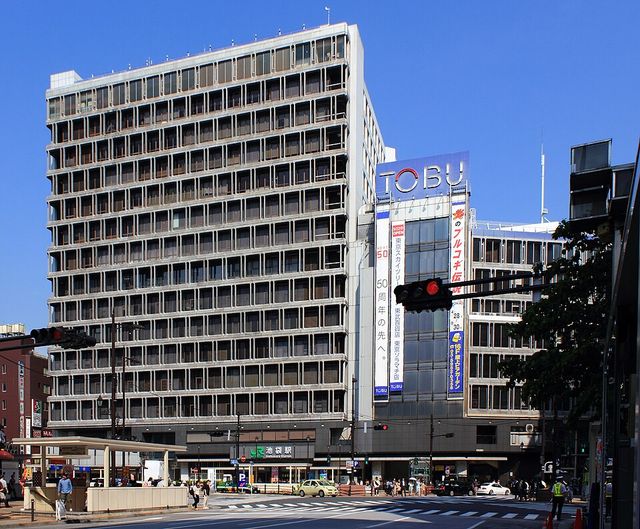
Ikebukuro station west 2012.JPG · Kakidai · CC BY-SA 3.0
Unmodified image file; scaled to fit the page. Photo remains under its stated license.
- Station
- Ikebukuro (池袋)
- Line
- Yamanote Line (山手線)
- Operator
- East Japan Railway Company (東日本旅客鉄道)
- MLIT dataset ID
- 003390 — a dataset identifier, not a passenger signage number
- Dataset reference date
- 2025-12-31
Use both levels of the station guide
JR East publishes an upper-floor plan and a basement plan for Ikebukuro. A meeting point or a street destination can depend on which side and level you leave, so carry the specific exit or gate name with the station name. The map is a better next source than the dataset’s numeric feature ID.
A comparison that helps an actual trip
An editorial comparison with Shinjuku should start with the destination you need to reach, not the general reputation of either interchange. Trace the full chain from train to gate to street or onward operator. This article does not supply a walking time or certify that a particular gate is the shortest route.
What the preserved record can support
The MLIT snapshot is referenced to 31 December 2025 and identifies a station-line feature operated by JR East. It is useful for geographic reference and matching names. Live operation, fares, platform changes and accessible-route availability are different datasets; the new reading guide does not fill those gaps with assumptions.
Article sources
About this station
Ikebukuro Station (Japanese: 池袋駅, romanized: Ikebukuro-eki) is a major railway station located in the Ikebukuro district of Toshima, Tokyo, Japan, shared by the East Japan Railway Company (JR East), Tokyo subway operator Tokyo Metro, and the two private railway operators Seibu Railway and Tobu Railway. With 2.3 million daily passengers on average in 2023, it is the third-busiest railway station in the world (after Shinjuku Station and Shibuya Station), and the busiest station in the Tobu, Seibu, and Tokyo Metro networks. It primarily serves commuters from Saitama Prefecture and other residential areas northwest of the city center. It is the Tokyo terminal of the Seibu Ikebukuro Line and the Tobu Tojo Line.
Seibu Railway
Seibu Ikebukuro Line (Ikebukuro to Agano) - limited through service to Seibu Chichibu Line; branches to Seibu Toshima Line, Seibu Yūrakuchō Line, and Seibu Sayama Line
Tobu Railway
Tōbu Tōjō Line (Ikebukuro to Yorii)
Tokyo Metro
On weekdays, S-Train (Seibu) services skip this station on the Tokyo Metro Yurakucho Line. However, on weekends or holidays, S-Train (Seibu) services stop here on the Tokyo Metro Fukutoshin Line platforms for alighting passengers only.
Station layout
In Ikebukuro Station, there are two main entrances: the East Exit and the West Exit. There are a number of other secondary entrances such as the JR North Exit, the Metropolitan Exit, the various Seibu exits, and multiple subway exits. The JR lines run north/south through the center. The Tobu platforms are to the northwest and the Seibu platforms are to the southeast. Both Tobu and Seibu operate department stores adjacent to their terminal stations. (Despite their names, "Seibu" (西武) starts with the kanji for "west" (西), but its platforms are on the eastern side of the station, while "Tōbu" (東武) starts with the character for "east" (東), but its platforms are on the western side of the station.) The Marunouchi Line and Yurakucho Line run east/west two stories underground, while the Tokyo Metro Fukutoshin Line is four stories underground, to the west of the main station complex. The latter line runs south toward Shinjuku and Shibuya along Meiji-dori, and offers through services to Motomachi-Chūkagai Station in Yokohama via the Tokyu Toyoko Line and Minatomirai Line. Tokyo Metro's underground mall "Echika" is also located inside the station.
JR East
Chest-high platform edge doors were introduced on the Yamanote Line platforms on 2 March 2013.
Platforms
The Tobu station has three terminating tracks served by platforms 1 to 5, arranged as shown in the diagram on the right.
Platforms 3 and 5 are normally used for disembarking passengers, although platform 5 is also used for passengers boarding the evening TJ Liner services, which require payment of a supplementary fare. Since 14 June 2015, the departure melodies used when trains are about to depart from the station are classical themes, with "Allegro" from "Divertimento in D major, K. 136" by Mozart used for platforms 1/2, "Menuetto" from "Eine kleine Nachtmusik" by Mozart used for platforms 3/4, and "Allegro ma non troppo" from the "Pastoral Symphony" by Beethoven used for TJ Liner services departing from platform 5.
Chest-high platform edge doors were scheduled to be added by the end of fiscal 2020. Platform doors protecting platform 1 are in use since 21 April 2018. It was planned to have platform doors protecting platforms 2 and 3 in operation from 2 March 2019.
Ticket barriers
There are three sets of ticket barriers giving access to the platforms: the "South Gate" at ground level (signposted in red), and the "Central Gate" (signposted in blue) and "North Gate" (signposted in green) on the first basement level.
Seibu Railway
Platforms 1, 4, and 6 are normally used for disembarking passengers only.
Platform
This station consists of three separate island platforms for the Marunouchi Line, Yurakucho Line, and Fukutoshin Line.
Station layout
The Tokyo Metro platforms are equipped with chest-height platform edge doors.
History
The station was opened on 1 April 1903 by the Japanese Government Railways (JGR). The Tōjō Railway Line (present-day Tobu Tojo Line) station opened on 1 May 1914 with the opening of the 33.5 km (20.8 mi) line to Tanomosawa (田面沢駅) in Saitama Prefecture (located between the present stations of Kawagoeshi and Kasumigaseki). As the Tokyo terminus of the line was originally planned to be at Shimo-Itabashi, Ikebukuro Station is to this day marked by km post "-1.9" (the distance from Shimo-Itabashi Station where the "0 km" post for the line is located). Tobu opened a department store adjoining its station on 29 May 1962. Around the same time, the Tobu station platforms were expanded with three tracks. In March 1992, automatic ticket barriers were installed at the north exit of the Tobu Station, and in June of the same year, the Tobu Department Store was expanded with the addition of the Metropolitan Plaza annex located on the south side. The station facilities of the Marunouchi and Yurakucho Lines were inherited by Tokyo Metro after the privatization of the Teito Rapid Transit Authority (TRTA) in 2004. In June 2008, the Tobu station ticket barriers were color-coded into three "zones": North, Central, and South. Chest-height platform edge doors were installed on the Tokyo Metro Yurakucho Line platforms in January 2011. Station numbering was introduced to the JR platforms in 2016 with Ikebukuro being assigned station numbers JY13 for the Yamanote Line, JA12 for the Saikyo Line, and JS21 for the Shonan-Shinjuku Line. On 1 March 2024, the departure melody on both Yamanote Line platforms was changed to the theme song of Bic Camera. The company has its head office and a major store building in the area.
Passenger statistics
The figures below are the official number of passengers entering and exiting each day released by each train operator.
Annual passenger figures for the station between fiscal 1903 and 1965 are as shown below. Note that the figures only consider boarding passengers and a blank indicates that no data is available.
Source: Tokyo Metropolitan Government
The daily passenger figures for the JR East, Seibu, Tobu, and Tokyo Metro station after fiscal 2000 are as shown below. Note that the JR East figures only consider boarding passengers whereas the Seibu, Tobu, and Tokyo Metro figures consider both entering and exiting passengers.
Surrounding area
The surrounding Ikebukuro district is a major commercial center. The Seibu department store, Sunshine City, Parco, and Bic Camera are located to the east of the station, while the Tobu department store and Metropolitan Plaza are located to the west.
Schools
Rikkyo University Tokyo College of Music Teikyo Heisei University (Ikebukuro Campus) Tokyo International University (Ikebukuro Campus) Tokyo University of Social Welfare (Ikebukuro Campus) Shukutoku University (Ikebukuro Satellite Campus) Tokyo College of Transport Studies Toshimagaoka-joshigakuen Junior and Senior High School
Retail
Seibu Department Store Parco Department Store Tobu Department Store Bic Camera Yamada Denki Sunshine City
Hotels
Hotel Metropolitan Centurion hotel Ikebukuro
Civic
Toshima Tax Office Toshima Civic Centre Tokyo Metropolitan Theatre Ikebukuro Library Ikebukuro Fire Station
Other stations
Higashi-Ikebukuro Station, on the Tokyo Metro Yurakucho Line
About text adapted from the Wikipedia article Ikebukuro Station by its contributors (CC BY-SA 4.0).
Source and licence
出典:国土数値情報(鉄道データ)国土交通省 — このページは「国土数値情報(鉄道データ)N02-2025」を加工して作成した。
Source: National Land Numerical Information (Railway data) N02-2025, Ministry of Land, Infrastructure, Transport and Tourism, Japan; processed and formatted by GIZUMO. Dataset reference date: 2025-12-31. Dataset page: MLIT N02-2025. This archive is a selected sample of station/line features, not live travel information; timetables and current operations are not supplied.